


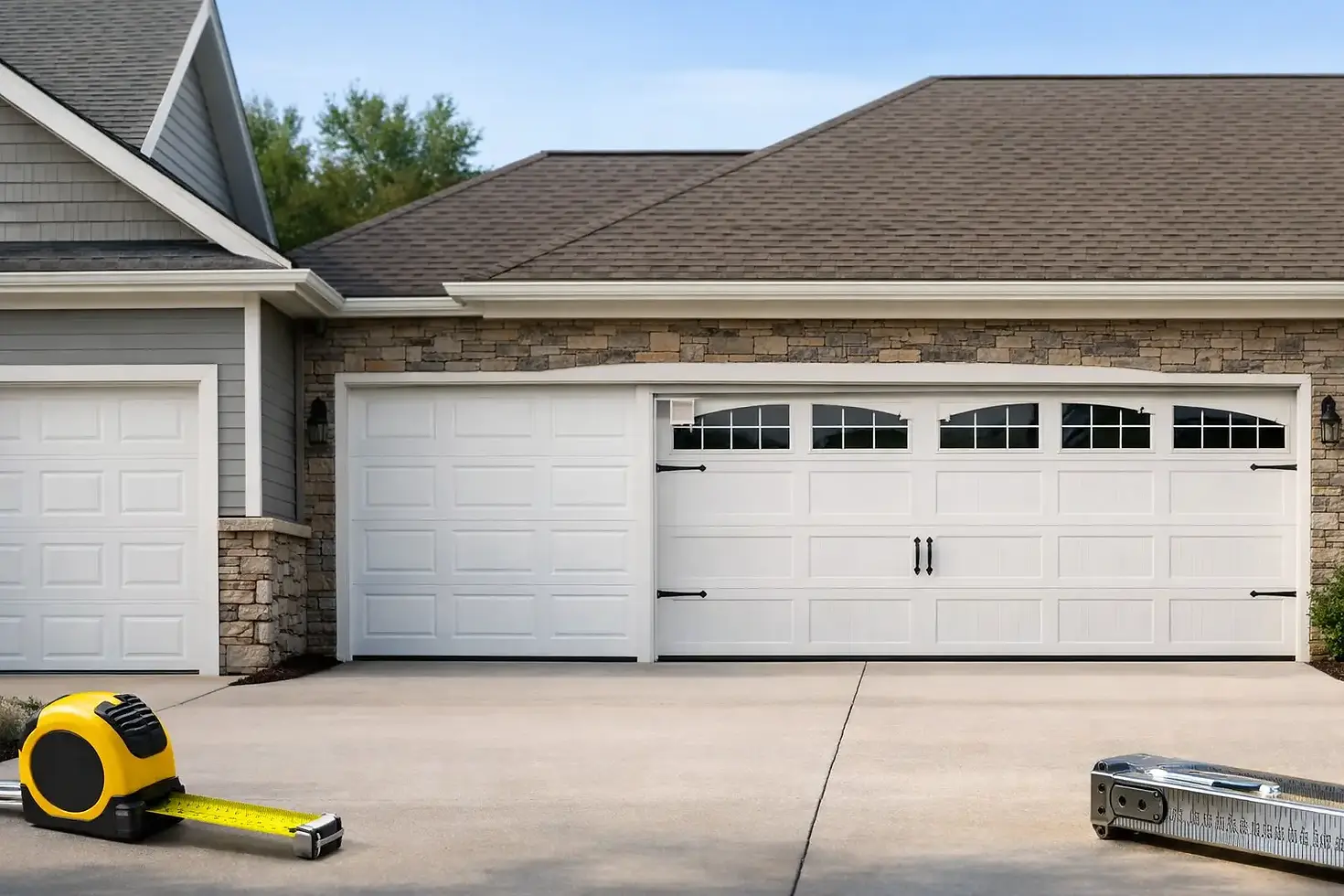
Residential Garage Door Sizes Explained
- Mike Sheppard
- Jun 8
- 6 min read
A garage door that is even a little too small or too large creates problems fast. It can leave gaps, strain the opener, limit vehicle clearance, and turn a simple replacement into a much bigger job. That is why understanding residential garage door sizes before you order a new door matters more than most homeowners expect.
If you are replacing an older door in Cincinnati, Loveland, or Northern Kentucky, size is not just about what looks right from the driveway. It affects headroom, track setup, insulation options, opener compatibility, and how smoothly the door operates every day. In many homes, the right fit is the difference between a straightforward install and costly adjustments.
Standard residential garage door sizes
Most residential garage doors fall into a handful of common widths and heights. For single-car garages, the most common widths are 8 feet, 9 feet, and sometimes 10 feet. Standard heights are usually 7 feet or 8 feet. A very common single-door size is 9 feet wide by 7 feet high.
For two-car garages, the usual widths are 12 feet, 14 feet, 16 feet, and 18 feet. The most common double-door size in newer homes is 16 feet wide by 7 feet high. In some neighborhoods, especially where trucks and SUVs are common, 8-foot-tall doors are becoming more popular.
That said, standard does not mean universal. Older homes around Greater Cincinnati often have openings that do not line up perfectly with modern stock sizes. You may find framing that has shifted, concrete that is uneven, or an opening that was modified during a past repair. This is one reason measuring the actual opening is more important than assuming the existing door tells the whole story.
How residential garage door sizes affect daily use
The size you need depends on more than how many cars fit inside. Vehicle height matters. So does mirror clearance, overhead storage, and whether you want room for bikes, lawn equipment, or shelves along the wall.
A homeowner with two midsize cars may do fine with a standard 16-by-7 door. But if one vehicle is a full-size pickup with a roof rack, that same opening can feel tight. The door may technically work, but clearance will be less forgiving. That is where an 8-foot height can make daily use easier and reduce the chance of accidental damage.
There is also a trade-off between one double door and two single doors. One double door gives you a wider clear opening and often a cleaner look from the street. Two single doors can offer more structural separation and, in some cases, lower replacement cost if only one side is damaged later. It depends on the home, the framing, and how the garage is used.
Measuring for the right fit
Before replacing a door, you need more than the width and height of the opening. A proper measurement also includes side room, headroom, and backroom.
Width and height are the basic opening dimensions. Measure the finished opening from side to side and from floor to the top of the opening. Then measure the side room on both sides, which is the space between the opening and the adjacent wall. This area is needed for the vertical tracks and hardware.
Headroom is the distance from the top of the opening to the ceiling or any obstruction above it. This matters for track radius, spring systems, and opener setup. Backroom is the depth from the garage door opening into the garage. That space must be long enough for the horizontal tracks and the opener rail if you have an automatic system.
If any of those measurements are tight, the job may still be possible, but it may require low-headroom hardware or other adjustments. That is where homeowners can get into trouble by ordering a door based only on width and height. The door itself may be the right size, but the garage may not have the space to support a standard track system.
Common single and double door size ranges
Single garage doors
Single doors are usually selected for one-car garages, detached garages, or homes with two separate openings. The most common sizes are 8x7, 9x7, and 10x7. In some cases, 8-foot heights are used instead of 7-foot heights.
An 8-foot-wide door is often found on older homes and can feel narrow for modern vehicles. A 9-foot-wide door gives more comfortable clearance for most drivers. A 10-foot-wide door is less common in standard neighborhoods, but it can be useful where extra side clearance is needed.
Double garage doors
Double doors are typically used for two-car garages and larger attached garages. The most common size is 16x7, with 16x8 also becoming more common. Some homes have 14-foot-wide doors, especially if the opening was designed for smaller vehicles or tighter lot layouts.
A wider door can make parking easier, especially for families with larger vehicles or teenage drivers. But wider doors also place more demand on hardware, springs, and openers. If the door is oversized or heavier because of insulation and windows, the system needs to be matched correctly.
When custom garage door sizes make sense
Not every garage should get a standard-size replacement. Custom sizing is often the better choice when the home has a nonstandard opening, an older structure, or a design goal that stock doors cannot meet.
For example, carriage-style doors, full-view glass doors, and some high-end insulated models may be available in custom dimensions to better fit the home. If the opening is just slightly off from standard, a technician may be able to adjust framing or use trim to make a standard door work. But if the difference is significant, trying to force a stock size into the space can create sealing, balance, and appearance issues.
Custom doors usually cost more and may take longer to arrive. Still, that added cost can be worth it if it avoids repeat repairs, uneven gaps, or a poor fit that affects curb appeal. A garage door is one of the largest moving parts on your home. It pays to get the sizing right the first time.
Size is only part of the replacement decision
Homeowners often start by searching for residential garage door sizes, but size alone does not tell you what the finished project will involve. Door material, insulation level, panel design, window placement, and opener strength all matter too.
An insulated steel door in a standard 16x7 opening may weigh much more than an older non-insulated door of the same size. That can affect spring sizing and opener performance. If your current opener is aging or underpowered, replacing the door without evaluating the operator can lead to noisy operation or early wear.
This is especially relevant in the Cincinnati area, where garages often serve as workspaces, storage areas, or a buffer against winter temperatures. If the garage is attached to the home, an insulated door with the right fit can help with comfort and efficiency. If there are gaps around the edges because the size is off, some of that benefit is lost.
Mistakes homeowners make with garage door sizing
One common mistake is measuring the old door instead of the opening. The old door may have been undersized, modified, or installed with filler materials that hide the true dimensions.
Another mistake is ignoring floor slope. Many garage floors are not perfectly level, and that affects how the bottom seal meets the concrete. If the door size is technically correct but the floor drops on one side, you may still see light or water at the bottom.
A third issue is assuming a taller door is always better. Extra height sounds useful, but if your garage lacks the headroom for the proper track setup, the project can become more involved. Sometimes the better solution is a different hardware configuration rather than a taller door.
Choosing the right size for your home
If your current door works well and the opening is standard, replacing it with the same nominal size is often the simplest path. But if you have had clearance issues, air leaks, water intrusion, or repeated hardware strain, this is the time to look more closely.
Think about the vehicles you own now, not the ones the garage was built for decades ago. Consider whether you want more usable space, better insulation, or a door style that changes the look of the front elevation. Good sizing supports all of that.
For homeowners who are not sure what they have, a site measurement is usually the fastest way to avoid ordering the wrong door. A trained garage door professional can spot framing problems, limited headroom, worn hardware, and opener issues that do not show up on a tape measure. At Fix My Garage Door, that practical approach helps homeowners avoid delays and get a door that fits, seals, and runs the way it should.
The right garage door size should make daily life easier, not tighter, louder, or more complicated. When the fit is right, you notice it every time the door opens smoothly and closes with a solid seal.


Comments