


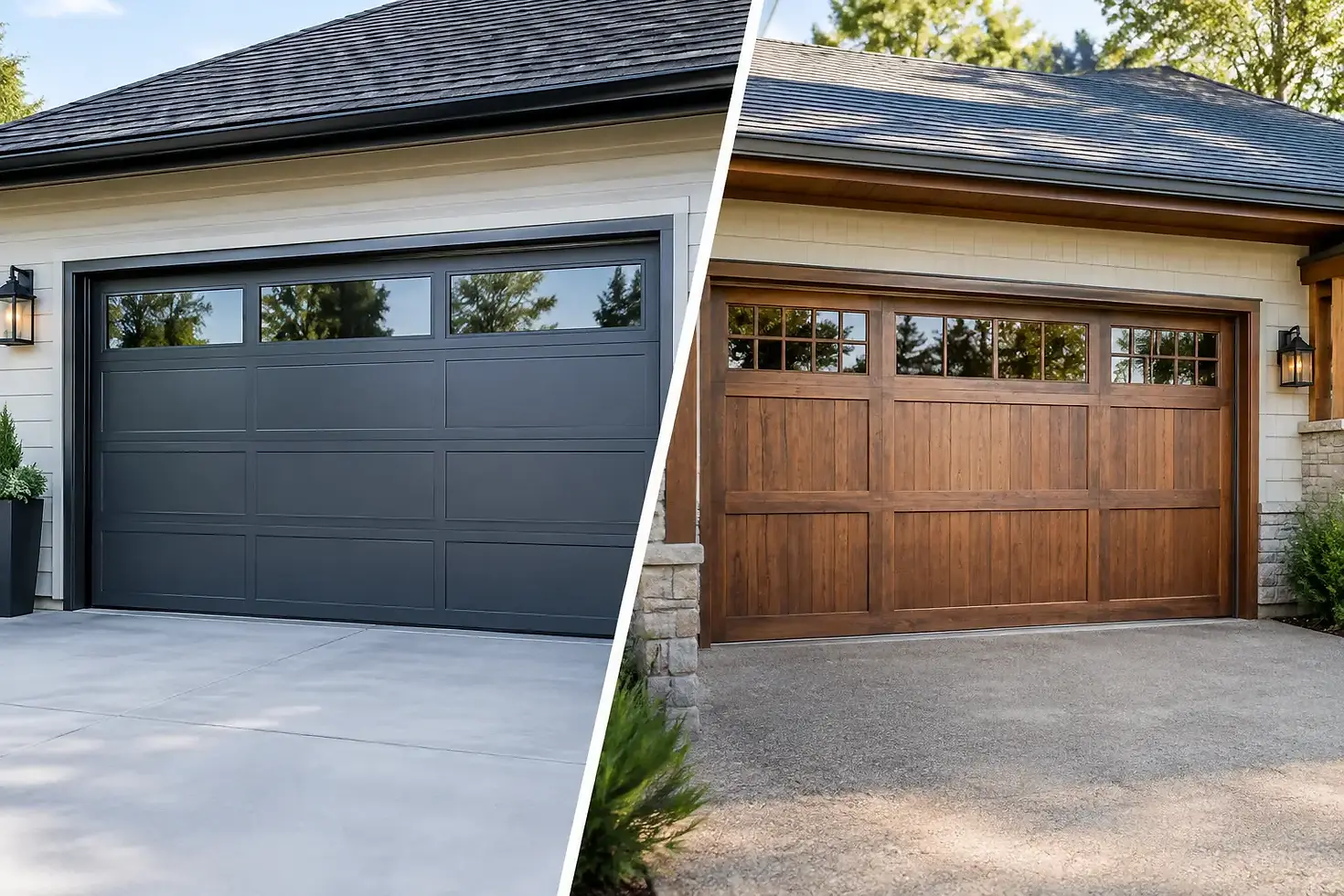
Steel vs Wood Garage Doors for Your Home
A garage door can take up a large portion of your home's front exterior, so the material you choose changes more than curb appeal. When homeowners compare steel vs wood garage doors, they are usually balancing appearance, budget, insulation, and the amount of maintenance they are willing to handle year after year.
For homes across Greater Cincinnati, Loveland, and Northern Kentucky, weather is part of that decision. Summer humidity, winter cold, rain, sun exposure, and daily use all affect how a door looks and performs. Steel is the practical choice for many households, while real wood offers a custom appearance that some homes simply cannot match. The better option depends on what matters most at your property.
Steel vs Wood Garage Doors: The Main Differences
Steel garage doors are manufactured panels, often with a stamped design that can resemble traditional raised panels, carriage-house doors, or even wood grain. They are widely available, generally more affordable than real wood, and can be ordered with insulation for better temperature control.
Wood garage doors are built from natural wood materials and can be painted or stained in a wide range of colors. They bring warmth, texture, and architectural detail that works especially well on historic homes, upscale traditional homes, and properties with wood trim or natural siding.
The biggest difference is not simply how they look on installation day. Steel requires less attention over time. Wood rewards regular care with a distinctive finish, but neglect can lead to peeling paint, fading stain, moisture damage, and warping.
Why Homeowners Choose Steel Garage Doors
Steel doors make sense for homeowners who want a dependable, low-maintenance upgrade. They are available in many styles, including designs that complement ranch homes, brick colonials, modern exteriors, and carriage-house architecture. A steel door does not have to look plain or industrial.
Lower upkeep and predictable ownership costs
A quality steel garage door needs periodic cleaning, inspection, and touch-up work if the finish is scratched. That is far less demanding than refinishing a wood door. For busy families, rental properties, and commercial buildings, this is often a deciding factor.
Steel is also less vulnerable to moisture than wood. Cincinnati-area weather brings rain, snow, freeze-thaw cycles, and humid stretches that can be hard on exterior wood surfaces. A properly finished steel door handles those conditions well, although deep scratches should be addressed before exposed metal has a chance to rust.
More insulation options
Many steel doors are available as insulated models with polyurethane or polystyrene cores. This can help reduce heat transfer through the garage, which matters when the garage is attached to the home or located below a bedroom, office, or living space.
Insulation will not turn an unconditioned garage into a heated room, but it can make the space less extreme during hot and cold weather. It can also reduce outside noise and help the door feel more solid during operation. Homeowners who use the garage as a workshop, home gym, or storage area often appreciate the difference.
A practical fit for most budgets
Steel doors typically offer more choices at accessible price points. Final cost still depends on size, insulation, windows, hardware, style, and installation requirements, but steel usually delivers a strong balance of appearance and value.
The trade-off is that steel can dent from a vehicle bump, basketball impact, or heavy object. Thin, uninsulated doors are more prone to denting than heavier insulated models. In many cases, a damaged steel panel can be replaced, but matching the color and design may be a consideration on an older door.
When a Wood Garage Door Is Worth It
Wood doors are chosen for appearance first, and for good reason. No printed wood-grain finish fully duplicates the depth, variation, and character of real wood. A custom wood door can become one of the strongest visual features of a home's exterior.
Unmatched architectural character
If your home has natural cedar accents, a covered porch, stone details, or a classic carriage-house design, a wood garage door can tie the exterior together beautifully. It can be built with custom window layouts, decorative hardware, and stain colors that suit the rest of the property.
Wood also allows refinishing rather than complete replacement when the surface becomes worn. A skilled refinishing job can renew its appearance and even change the color as your exterior style evolves.
Maintenance is the real commitment
A wood garage door needs routine attention. Depending on the wood species, finish, sun exposure, and weather conditions, it may need repainting or restaining every few years. The bottom edge, joints, and areas around windows deserve close inspection because water intrusion can cause trouble before it becomes obvious from the street.
Wood is also heavier than steel. That does not mean it is a poor choice, but the springs, cables, rollers, track, and opener need to be properly sized and maintained. A heavier door puts more demand on the entire system. Professional installation and regular garage door service are especially important for safe, reliable operation.
Higher upfront cost
Real wood doors usually cost more than comparable steel doors. The price reflects materials, craftsmanship, weight, finishing, and often custom work. For homeowners planning a long-term exterior renovation or trying to preserve a home's original character, that investment may be worthwhile. For someone replacing a damaged door quickly and affordably, steel is usually the more practical route.
Insulation, Energy Use, and Everyday Comfort
Material alone does not determine how well a garage door insulates. A steel door with a high-quality insulated core generally provides better thermal performance than a standard wood door. However, wood has natural insulating properties and can perform well when it is properly constructed.
Look beyond the advertised R-value. A door's performance also depends on weather seals, bottom seals, perimeter gaps, windows, and the condition of the garage framing. Even a well-insulated door cannot do its job if cold air is coming through damaged seals or large gaps around the opening.
For attached garages, insulation is often worth considering regardless of whether you choose steel or wood. It can help protect nearby rooms from temperature swings and make the opener quieter. If your current door rattles, shakes, or lets in drafts, an inspection can reveal whether the issue is the door itself, worn hardware, poor sealing, or all three.
Choosing the Right Door for Your Property
Start with the home's style, then be honest about maintenance. A steel door is usually the stronger choice if you want a durable, insulated option with less ongoing work. It is well suited to most suburban homes, rental properties, and garages that see frequent daily use.
A wood door may be the right fit if curb appeal is a top priority, you want a custom stain or design, and you are prepared to maintain the finish. It is especially compelling when a standard door would look out of place against the rest of the home's architecture.
Also consider how long you expect to stay in the home. If you are preparing to sell, a well-chosen steel carriage-house door can provide a major exterior update without the maintenance commitment of wood. If you are restoring a long-term home with distinctive architectural details, real wood can be a meaningful investment.
Do Not Overlook Installation and Hardware
The best door material will not perform well with worn springs, damaged rollers, a struggling opener, or improperly adjusted tracks. This is particularly true with heavier wood doors, but every new garage door should be matched to the correct spring system and installed with safe, reliable hardware.
Before replacing a door, have the opening, framing, headroom, and existing opener evaluated. Some older openers may not be a good match for a heavier or taller replacement door. Safety sensors, weather seals, and balance should be checked as part of the work, not treated as afterthoughts.
A door that is properly balanced should move smoothly and should not make the opener work harder than necessary. If your current door slams, binds, reverses unexpectedly, or has a broken spring, avoid forcing it open. Those problems should be handled by a trained technician.
Whether you prefer the low-maintenance value of steel or the natural character of wood, choose a door that fits the way you use your garage and the care you can realistically provide. A quick professional assessment from Fix My Garage Door can help you compare styles, insulation options, and hardware before you make a decision you will see every day.


Comments