


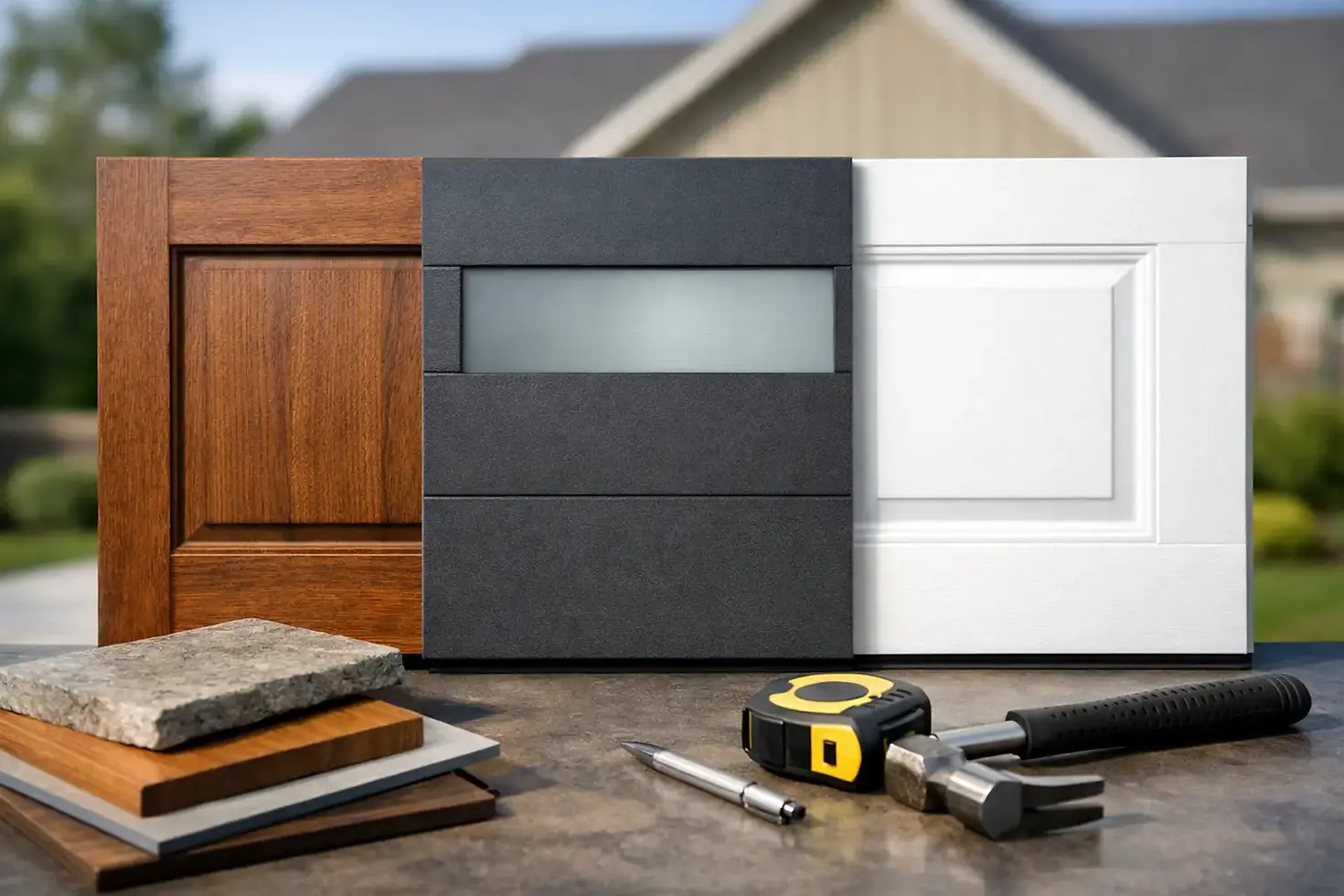
Choosing Garage Door Materials for Your Home
A garage door can take up a large portion of your home's front exterior, but appearance is only part of the decision. The right garage door materials affect how well the door handles Ohio and Northern Kentucky weather, how much maintenance it needs, how quiet it operates, and how efficiently it helps protect your garage from temperature swings.
For most homeowners, the best choice comes down to four questions: What look do you want? How much insulation do you need? How much upkeep are you willing to handle? And what makes sense for your budget? Here is a practical look at the most common options.
Steel Garage Doors: The Most Practical Choice for Many Homes
Steel is the most common garage door material for good reason. It is durable, widely available, reasonably priced, and available in a broad range of styles. A steel door can have the clean look of a modern flush panel, traditional raised panels, or a wood-grain finish that gives you a warmer appearance without the maintenance demands of real wood.
For Cincinnati-area homes, insulated steel is often an especially solid investment. A quality insulated door helps reduce heat loss from an attached garage during winter and limits summer heat buildup. It can also make the door feel sturdier and operate more quietly than a thin, non-insulated model.
Steel does have a few trade-offs. It can dent if a vehicle, basketball, or heavy object strikes it. Scratches should be touched up promptly, especially around the bottom of the door, because exposed metal can eventually rust. Galvanized steel and a durable factory finish provide good protection, but regular inspection still matters.
Steel is a strong fit when you want dependable performance, plenty of design choices, and a manageable price. It also works well for many commercial settings, although commercial doors may require heavier-gauge construction based on use and opening size.
Why insulation changes the value of a steel door
Not every steel door has the same construction. Basic models may use a single layer of steel. Better doors commonly have steel on both sides with polystyrene or polyurethane insulation in the middle. Polyurethane insulation generally creates a denser, more rigid door with stronger insulating performance.
If your garage is attached to the house, has a room above it, or doubles as a workshop, insulation is worth serious consideration. The door will not turn an unconditioned garage into a living room, but it can reduce drafts, outside noise, and extreme temperature changes.
Wood Garage Doors: Unmatched Character With More Upkeep
A real wood garage door has a depth and natural character that other materials try to imitate. It is an excellent match for historic homes, custom-built homes, carriage-house designs, and properties where curb appeal is the main priority. Wood can be painted or stained in a wide range of finishes, and it can be customized more easily than many factory-made doors.
The trade-off is maintenance. Moisture, direct sunlight, and changing temperatures can cause wood to expand, contract, fade, crack, or warp over time. In our region, a wood door needs regular attention to keep it protected. Depending on its exposure and finish, that may mean inspecting it annually and refinishing it as needed.
Wood doors also tend to cost more than standard steel doors. They may be heavier, which means springs, cables, tracks, and the opener must be properly matched to the door's weight. A door that is difficult to lift or does not stay balanced halfway open should be checked by a trained technician. Do not adjust garage door springs yourself. They are under extreme tension and can cause serious injury.
Wood is the right choice when its appearance is central to your home's design and you are comfortable with the long-term care it requires. For a lower-maintenance alternative, consider a steel door with a convincing wood-grain finish or a composite overlay.
Aluminum and Glass: A Clean, Modern Look
Aluminum garage doors are lightweight, corrosion-resistant, and popular in contemporary home designs. Many feature glass panels in an aluminum frame, bringing natural light into the garage and creating a distinctive modern look. Aluminum also avoids the rust concern that can come with damaged steel finishes.
However, aluminum is softer than steel and can dent more easily. Full-view glass doors can also be a less efficient option if they use non-insulated glass or are installed on a garage that needs strong temperature control. Insulated glass is available, but it typically adds to the price.
Privacy is another consideration. Clear glass looks sharp, but it allows people to see into the garage. Frosted, tinted, obscure, or mirrored glass can provide daylight while limiting visibility. Homeowners should also consider the placement of windows in relation to the afternoon sun, since direct sun can make a garage uncomfortably warm.
Aluminum and glass are best for homeowners who want a design-forward door, need more natural light, and accept that dent resistance and insulation may not be the leading priorities.
Fiberglass and Composite Garage Door Materials
Fiberglass doors can resist moisture and corrosion, making them useful in damp or coastal environments. They are lightweight and can be made with a wood-like texture. In Greater Cincinnati and Northern Kentucky, fiberglass is less common than steel but can still make sense for specific style or moisture-resistance needs.
One concern is durability in cold weather. Some fiberglass doors can become more brittle in low temperatures, and the material may crack after a hard impact. Insulation and construction quality vary widely, so it is worth comparing the full door system rather than choosing based on the surface material alone.
Composite garage doors generally combine engineered materials, steel, and insulation to create the look of wood with less maintenance. They can be an appealing middle ground for homeowners who like carriage-house styling but do not want to regularly stain and seal a natural wood door. Like any premium product, quality varies by manufacturer, so panel construction, warranty coverage, and insulation rating deserve attention.
How to Compare Garage Door Materials Before You Buy
Material matters, but the finished door should be evaluated as a complete system. A well-built door with proper installation can outperform a more expensive material that is poorly fitted or paired with worn hardware.
Start by looking at insulation. Ask about the door's R-value, but also think about how you use the garage. A detached garage used only for parking may not need the same level of insulation as an attached garage with a bedroom overhead. Insulated doors can also reduce vibration and operating noise, which is helpful when family members leave early or arrive late.
Next, consider maintenance realistically. A wood door may be beautiful, but it is not the best choice if you want a door you can largely forget about. Steel typically offers the easiest balance of durability and care. Aluminum and glass may need more frequent cleaning to keep their appearance, while composite products may offer a useful low-maintenance compromise.
Finally, do not overlook color, windows, hardware, and structural design. Decorative handles and hinges can create a carriage-house look. Window placement can add character and daylight. These decisions should complement the architecture of the home rather than follow a trend that may feel dated in a few years.
Installation Matters as Much as the Door
Even the best garage door material cannot perform well with incorrect installation. The tracks must be aligned, the springs must be sized correctly, the safety sensors must work, and the opener must be able to lift the door without strain. A new door should move smoothly by hand when disconnected from the opener and should reverse properly when the safety system is tested.
For an aging door, replacement is not always the only answer. Damaged panels, failing rollers, worn weather seals, and insulation concerns can sometimes be addressed without replacing the entire system. On the other hand, severe rust, repeated panel damage, a poorly insulated door, or an outdated design may make replacement the better long-term value.
Fix My Garage Door helps homeowners and property managers throughout Greater Cincinnati, Loveland, and Northern Kentucky evaluate these practical choices without unnecessary complexity. The goal is a door that looks right, operates safely, and fits the way your property is actually used.
A garage door is used more often than many front doors, so choose the material with everyday life in mind. The best option is the one that gives your home the appearance you want while holding up to weather, use, and maintenance expectations for years to come.


Comments